
When I was a child in elementary school, we used these workbooks called Think and Do. They were a part of our Language Arts curriculum. We practiced our developing reading skills through our grade level reading books plus these corresponding workbooks. I liked the workbooks, I realized later, because the exercises broke concepts down into steps and showed patterns that I could then apply.
Reading did not come easily to me, so I needed process steps to make connections. No matter the mental process we engage, we are always thinking and doing. Think and do.
Where does the “feeling” come in? Emotion is always present in both the thinking and the doing. We cannot think anything or do anything without emotion permeating thought and action.
Why do I bring this up? Recently I was asked about how I process my feelings as part of my faith. Interesting.
Craig Troxel, author of With All Your Heart, defines heart this way:
The heart is the governing center of a person. When used simply, it reflects the unity of our inner being, and when used comprehensively, it describes the complexity of our inner being—as composed of mind (what we know), desires (what we love), and will (what we choose).[1]

What is in her mind, will, and desires? Sigh! I have photos I wanted to upload to this post, but couldn’t pull them up, so I’ll put in two entertaining shots to stir your thoughtful emotions!
Troxel expresses the biblical view. In contrast, our culture presents the heart as the feeling domain (the affective) and the mind as the thinking domain (the cognitive). Where is the deciding domain (the volitional)? It seems that the volitional domain is the judge having to sort out feelings and thoughts.
In order to judge (so this must include the conscience), doesn’t the volitional domain have to both think and feel? You may not like a certain feeling that clings to a thought, but can you think without some emotive nuance or response?
I don’t think so. When you try to separate a thought from a feeling, I think you simply trade one feeling for another (or think you are doing this). I choose not to be upset, afraid, or angry as a response, but choosing calmness, determination, or courage will still involve emotion. Troxel equates feeling with “desires (what we love)”.
We are always loving something. We are always thinking something. In order to think about something, we have to choose not to think about many others things. To think about something requires decision-making.
A simple self-reflection shows that thinking, feeling (our desires/loves), and deciding always dance together. While we may refer to them as separate domains, they comprise one whole being – one’s inner, invisible being: one’s soul or self or heart.
The Bible references the heart nearly 1000 times. The Old Testament speaks of the heart at least 850 times. By looking at contexts, we can see how multi-dimensional the heart truly is. There is no such thing as “heart knowledge” and “head knowledge” or eighteen inches between our heads and hearts.
When our culture says “follow your heart,” it means “listen to your feelings because they are the real you.” When the Bible says “Watch over your heart with all diligence, for from it flow the springs of life” (Prov. 4:23), the instruction is to guard not only your feelings, but your thoughts and loves/desires. By guarding your thoughts and loves, you have more control over your feelings.
So, how do I process my feelings as part of my faith? My faith. What is this? There is “the faith”, as in a body of beliefs. There is “faith” as a noun and as a verb. It is something you have and something you do.
Jesus explained, “Because of the littleness of your faith, for truly I say to you, if you have faith as a mustard seed, you shall say to this mountain, “Move…” (Mathew 17:20). Hmm. We don’t have much faith, but faith is something we have.
Faith is also what we do. It is a verb. “We walk by faith not by sight” (2 Cor. 5:7). “Faith without works is dead” (James 2:26). “No,” you say. “Faith is the idea or concept of your belief system. Your walk is the putting of that belief into action.”
Maybe so. Maybe walking by faith is “faithing.” Faith is confidence in God and the wisdom He gives. Where is the feeling in faith? Faith as confidence in God becomes the fuel that fires my feelings in a stabilizing way, not an uncontrolled way. I think the feeling is embedded in the believing and the acting upon the belief.
When my actions line up with what I believe to be true (faith), I sense an integrity within myself that emotes as peace, joy, satisfaction, and quiet confidence.
We don’t have to work at feeling our faith. We don’t have to work at “knowing” God is near. We have to align our minds and decisions with the reality and accept it. “Be still and know that I am God” (Psalm 46:10) requires that we simply hear the Word of God, accept it, and trust it.
I don’t need special or mystical experiences to calm me, recharge me, or affirm my faith. I do need the constant interchange of God’s Word with my mind (Romans 10:17; 12:1-2) and the constant interchange of my mind presented to God in prayer. Being “still” is part of this (Psalm 46:10) . Speedsters run over their consciences.
I need the example of other believers, past and present, who model integrity and stillness and courage.
Proverbs 23: 15 says, “My son, if your heart is wise, my own heart also will be glad.” A wise heart exercises the mind and the will. A glad heart shows emotive response. Scripture shows the unity and complexity of the heart as the inner hub and dashboard of a person, directing ones hands and feet.
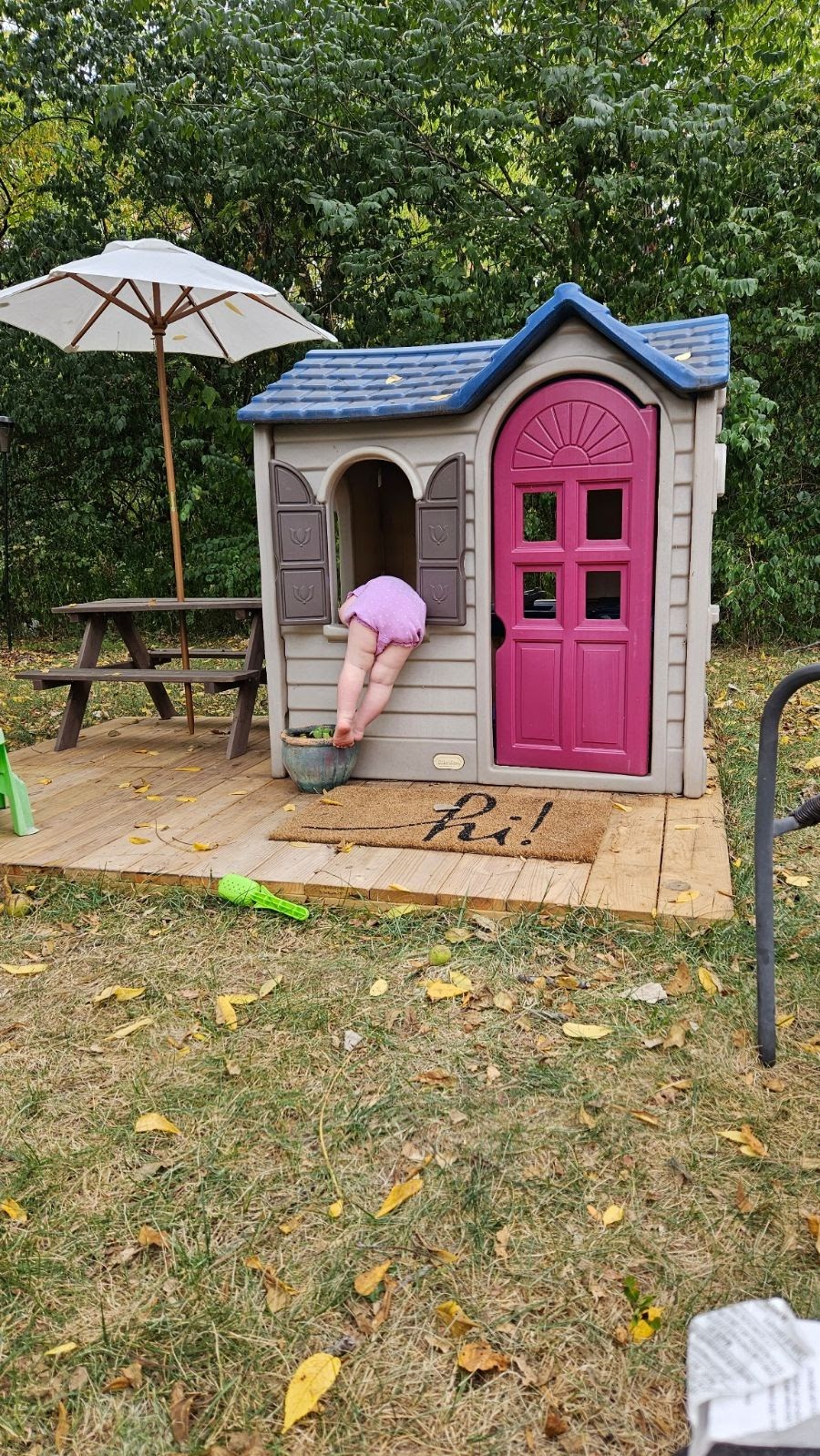
She had a thought. “What’s in there?” She had a desire. “I want in there.” She made a decision. “I’ll get in there one way or the other.” Her mother thought, “If your heart were wise, you’d ask for help.”
1 Peter 3: 15 instructs us to “sanctify Christ as Lord in your hearts.” This is the middle of the sentence.
Let’s look at verses 14-17 (NASB):
To “sanctify Christ as Lord in your hearts” is to separate Him as supreme over all other loves in your thoughts, desires, attitudes, and choices, which will result in a good conscience and godly action as described above.
Back to my childhood Think and Do workbooks.
Between “Think and Do” in the Christian life is newborn “Love”. “Think, Love, and Do.” Without a reborn and newborn heart, the harmonic dance of mind, emotion, and will cannot happen. The music is not there. The chemistry cannot ignite because there is no fire. Born from above (John 3), we become “new creations in Christ” (2 Cor. 5:17). We hear the music. We begin to recognize the melody, harmony, and rhythm in God’s Word. Ahh. Awkwardly, our thoughts, wishes, and choices learn to follow the director, our Good Shepherd.
Where’s the feeling? I feel it in my aligning obedience. Nothing fancy. Think. Feel. Do. Let’s hold hands.
[1] https://www.crossway.org/articles/one-of-the-most-misused-words-today. This is an excellent article to help you explore the biblical concept of the heart. I encourage you to read it.
Discover more from Journey North Character
Subscribe to get the latest posts sent to your email.


 Journey North Character