
Nouns are often used as verbs and verbs as nouns.
For instance, my grandmother would use the noun, butter, as a verb. “Do you want me to butter your toast?”
Let’s look at a sample from Scripture. The following is from the Berean Literal Translation of Matthew 28: 19: “Therefore having gone [as you are going], disciple all the nations, baptizing them in the name of the Father, and of the Son, and of the Holy Spirit.”
Here, “disciple” is used as a verb, an imperative (command). Disciple (verb). Something you should do. Many translations take this same Greek word and translate it as a verb plus noun: “make disciples.” Here “disciple” is used as a noun (direct object) and “make” is the verb (a transitive verb). Disciple can be a noun or a verb. A disciple is a pupil, student, or follower of a teacher or leader. “To disciple” is to lead someone, teaching and training a person to follow the leader (Christ), in order to become more like Him.
Subject, verb, direct object: Disciples disciple disciples: noun, verb, noun.
What’s your point?
My husband and I recently spent a week at Good Samaritan Mission in Balm/Wimauma, Florida. The director, Bill Cruz, is a licensed, certified Marriage and the Family Counselor. Besides being a professional counselor, he has been a pastor, mission director, and actor. We love to hear his stories and his biblical teaching.
In discussing the arc of marriage and child-rearing, Bill noted that when we become parents, the words, “Father” and “Mother” are verbs. We spend decades fathering and mothering our children. We verb them: hold them, feed them, change them, and get up at night with them. We teach and train them. Yes, we disciple them. We take them to school, church, and activities. We are verbing.
Then parents become nouns. What does this mean? How does that look?
It means that we work ourselves out of the verb job, the “I’m responsible for you” job, and the children take on more and more responsibility for themselves, until we parents no longer are responsible for their decisions and actions.
Then we spend the rest of our lives as Father or Mother. Nouns. Proper nouns: Father, Mother, Dad, Mom, Papa, Nana. Whatever name. We hope the usage is a noun of honor or respect. Rarely do many of us now have opportunities to act as verbs.
Of course, some parents of adult children end up parenting their grandchildren (the noun returns to the verb role). This is complicated, usually a partial blessing along with messiness. We pray for God’s involvement and provision in such situations.
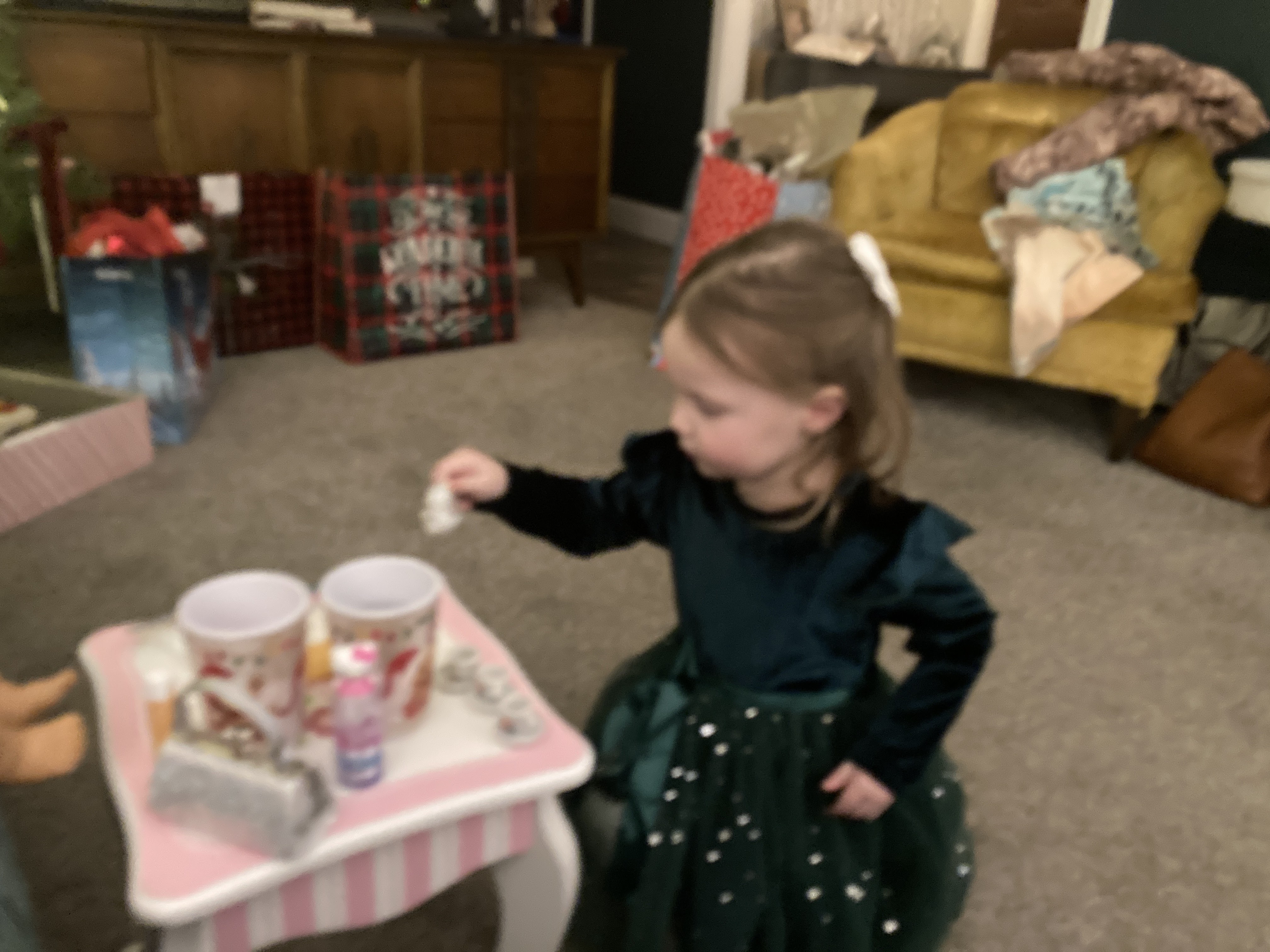
Nana (that’s me) gave her granddaughter a tea table and tea set. An introduction to hospitality, an artistic skill she can develop in years to come, as she is discipled, and then she can disciple others in the Lord.
As Bill simply stated that mother and father (verbs) become Mother and Father (nouns), something released in my heart. I felt a relaxation settle in my spirit. It was another step in coming to terms with and accepting more the sliver of a slice of mothering that is allowed me at my age and stage.
We have a daughter in her 30s and one in her 40s. You’d think that I would have made peace by now with my role as a noun and not a verb. For a mother, in my opinion, this is so difficult. It has taken much self-discipline and restraint over the years, much resignation (so it seems) while I continue to choose to trust the Lord to “disciple” my children without my personal involvement, that is, through other people God brings into their lives.
That is, prayer is my main involvement. And while I pray daily for our children and grandchildren, I don’t pray the detailed prayers I used to, not because I’m holding back my thoughts from God, but because I’ve learned that detailed prayers often take on a pleading attitude which makes me more fussy and less trusting. I’ve come to a point where I don’t have to know so much and do not think I need to be involved so much. I’ve learned to wait more.
On occasion I’m allowed to “mom.” Bill’s words have encouraged me to be more content with being “Mom,” “Mama,” or “Mother,” the proper noun. I feel rather respected in that role. On occasion there may be space given for a mom-verb act or word. It still feels strange to me, but since Paul and I have worked ourselves out of the verb role and our family is so capable of living their own lives, Paul and I are freed up for other involvements and investments. We see our family making good contributions in their circles of influence. This encourages us.
I have much for which to be thankful, even as I am wistful, wishing for more space to be a verb-mom. What is God’s calling upon my life? As a Christ-follower, the Great Commission is always our calling, no matter the age or stage.
Jesus said, “All authority has been given unto me in heaven and and on earth. As you are going, disciple all the nations (all ethnic groups), baptizing them in the name of the Father, and of the Son, and of the Holy Spirit, teaching them to observe all things, whatever I have commanded you. An lo, I am with you always, even unto the completion of the age” (Matthew 28:18-20).
Mother, father — as verbs. Mother, Father — as nouns.
Disciple, disciple — as nouns and verbs.
I may no longer be mothering, but I’ll always be discipling. I disciple myself, choosing to continue to follow Christ. I help to disciple others, as I encourage them to follow Christ. I affirm my children and grandchildren as I see them grow as disciples. Disciples disciple disciples. Until the end of this age.
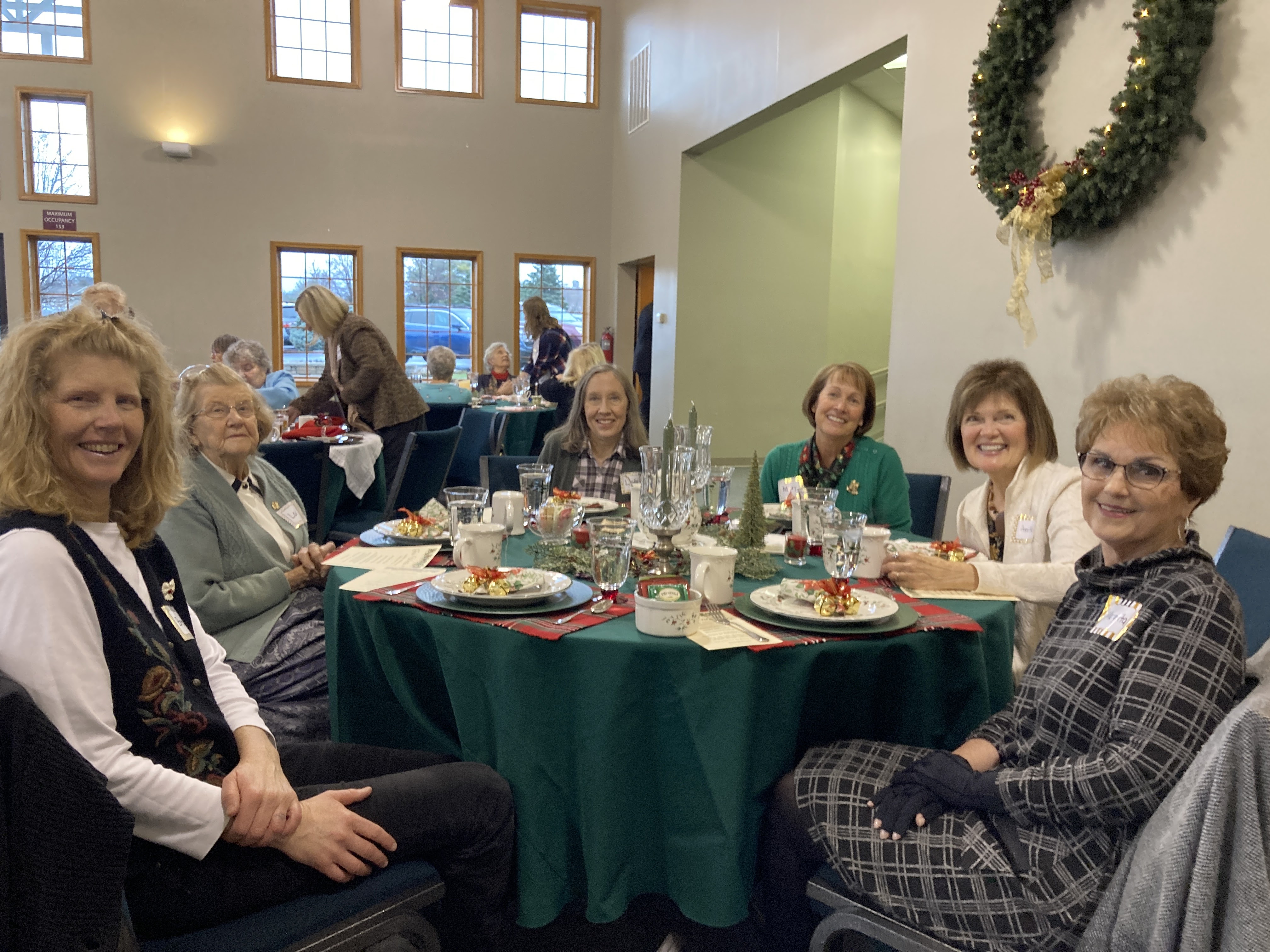
Teaching my granddaughter to plan a tea party (photo above) is one way of introducing her to discipling through tea fellowships in adulthood. Aesthetic discipleship: beautiful settings, lovely fellowship, and biblical teaching encouraging us to follow the Lord, together.
Discover more from Journey North Character
Subscribe to get the latest posts sent to your email.

 Journey North Character
I love that your sweet granddaughter is learning the art of teatime!
Thanks, Karen.
I found this super instructive and helpful.
Hope I remember your words when the mothering instinct strikes!
Sometimes I think, oh, did I forget to teach them that? Maybe it’s not too late if I just insert this little lesson right now.
Probably a better idea to let Father teach them. In His way, in His time.
“Disciples disciple disciples.” Love that!
Oh, Karen, I am rejoicing that Bill’s words about grammar (our mutual love!) have settled your heart with the release of verbing as a mother–the release of “messiness” and “fussiness.” May you continue to trust prayer as enough. However, the parenting dynamic must remain in balance (God’s design for it): He assigns (“commands”) children to honor their parents which at the minimum includes consistent contact and access to grandchildren (cf. Dennis Prager’s commentary on Exodus 20:12 in his Rational Bible, pp. 253-258 of Exodus: God, Slavery, and Freedom.) Marty
Marty,
Thank you so much for this balancing reply. You add what is needed.
I am so grateful!