
My dear readers,
I wrote the following script as an Oral Interpretation (interpretive reading) ten years ago for a “Candlelight Carols” event in our home in Arizona. Recently, I found it in my Christmas music, edited it a bit, and then re-wrote the ending, giving it a different turn.
If you can use the script in any way, a home advent reading or with a group, feel free to use it. It is very fitting this year to give attention to Henry Wadsworth Longfellow’s poem/carol, “I Heard the Bells on Christmas Day,” written on Christmas day in 1863. And to provide fascinating balance, I’ve brought in Phillips Brooks’ “O Little Town of Bethlehem,” written in 1867. What may we gain from their perspectives on heartache, war, providence, and the wondrous gift so quietly given to a noisy world?

Paul and I are going to be presenting this revised version this Sunday evening to our Home Group (five couples from our church that meet twice a month). We are calling our evening “Candlelight Carols and Cafe.” We will sing together, eat a fellowship meal together, and sing some more, scattering a few short readings in here and there, with this reading culminating toward the end.
So, how did Longfellow resist the encroaching despair when heartache upon tragedy invaded his world? Does the loudest noise need to be the most influential voice in your life? Listen to this reading:
| A reading presented by two readers:
Reader 1: Dark printed text. Preferably male (reading poetry by H.W. Longfellow and P. Brooks as well as closing quote and words). Reader 2: Narrator or storyteller. |
Near Drowning of the Bells
You’ve heard the song. You have probably sung it. But do you know the story?
I heard the bells on Christmas Day
Their old, familiar carols play,
And wild and sweet
The words repeat
Of peace on earth, good-will to men!
Originally a poem, later set to music, it was simply entitled, “The Bells.” Remember who wrote it? Yes, the American bard of the 19th century, poet and professor, Henry Wadsworth Longfellow. He was the author of such narrative poems as “Evangeline,” “Song of Hiawatha,” “The Courtship of Miles Standish, ” and “Paul Revere’s Ride.” Longfellow’s poem turned Christmas carol brings his own life into his lines.
And thought how, as the day had come,
The belfries of all Christendom
Had rolled along
The unbroken song
Of peace on earth, good-will to men!
Till, ringing, singing on its way,
The world revolved from night to day,
A voice, a chime,
A chant sublime
Of peace on earth, good-will to men!
When did he write these words? And why? The next two verses which are usually left out of our Christmas carol books offer some clues.
Then from each black, accursed mouth
The cannon thundered in the South,
And with the sound
The carols drowned
Of peace on earth, good-will to men!
It was as if an earthquake rent
The hearth-stones of a continent,
And made forlorn
The households born
Of peace on earth, good-will to men!
What major event was Longfellow referencing? “The cannon thundered in the South… the carols drowned… forlorn the households…. Certainly, the Civil War. Ah. This begins to explain Longfellow’s melancholy:
And in despair I bowed my head;
“There is no peace on earth,” I said:
“For hate is strong,
And mocks the song
Of peace on earth, good-will to men!”
But wait. How is Henry personally touched and changed? War touches families. Longfellow was born the same year as Robert E. Lee and two years before Lincoln. By the time the Civil War rolled around, Longfellow had packed into his heart a weight of life experience. Married twice, he had lost both wives. Traveling with her husband in Europe, Mary died because of complications with a miscarriage. Young, adventurous, and ambitious, Longfellow experienced his first heart-rending blow. The world revolved from day to night for Henry. And he emerged a richer thinker.
Years later, he married Francis Appleton, and they had six children, five reaching adulthood. But while the children were still home, another earth-shattering blow crashes in on this close-knit family. In a freak accident in 1861, Fanny caught herself on fire while she was melting some sealing wax. Henry tried to extinguish the flames, causing burns on his face and arm, but his efforts did not save his beloved Fanny. She died the next day. Henry was never the same. Suffering mocked their song.
The war commenced that year, and two years later, Henry’s oldest child, 17 year old Charles, enlists in military service. By the end of the year, Charley is home recovering from serious wounds (shot in the back, close to the spinal cord, the bullet exiting his right shoulder). Charley was alive, but for how long? What kind of recovery was possible for his son? On Christmas Day of 1863, Henry sits at his table and pens these words: “I heard the bells on Christmas day….”
Henry Wadsworth Longfellow, now 56 years old, has lived long enough to experience life’s adventures, joys, and deep sorrows. His fame as a poet and professor of languages has brought him much reward. His home life has given him life’s greatest satisfactions and deepest wounds. And experiential knowledge has trumped his academic accolades.
And in despair I bowed my head;
“There is no peace on earth,” I said:
“For hate is strong,
And mocks the song
Of peace on earth, good-will to men!”
What motivated Longfellow not to end with despair? His literary Romanticism? Doubtfully. Deep within him was an anchor that withstood the earthquakes. Deep within was a knowing — a knowing in his knower — not to be extinguished. A faith, a hope not in faith or hope, but as Henry said:
Then pealed the bells more loud and deep:
“God is not dead; nor doth he sleep!
The Wrong shall fail,
The Right prevail,
With peace on earth, good-will to men!”
The wars of the 20th century have come and gone, horrifically overshadowing the traumas of the Civil War. Now, almost a quarter century into the 21st century, the industry of war has nearly overpowered mankind, but then, no. There is a restraining Power.
Each individual, each family experiences “wars and rumors of wars” that have the potential to overpower — to destroy through despair. And at this Christmas season, we may do well to take some time, as Henry did, to sit and reflect on the specific realities of our lives – our trials and our blessings. Sorting through them, despair can be overruled by a firm conviction that “God is not dead; nor doth He sleep!”
Stronger than evil is God. More resilient than evil is good. God is good, does good, and responds to his own expressed goodness with divine joy. Therefore, the enduring, proper response by God’s people to God’s goodness is always joy. It is there. It is here.
Just four years after Longfellow penned “I heard the Bells on Christmas Day,” an American contemporary of Longfellow’s, Phillips Brooks, a distinguished, New England, Episcopalian minister penned his poem which became the Christmas carol, “O Little Town of Bethlehem.” He was inspired by memories of a visit two years earlier to the Holy Land and the Church of the Nativity in Bethlehem.
“O Little Town of Bethlehem” is a quiet reply to the clamorous bells of Longfellow’s “I Heard the Bells on Christmas Day,” those bells which “pealed more loud and deep….”
Listen to verse three of “O Little Town of Bethlehem”: “How silently, how silently, the wondrous gift is given. So God imparts to human hearts, the blessings of His heaven. No ear may hear His coming, but in this world of sin, where meek souls will receive Him still, the dear Christ enters in.”
And finally in verse 4: “O holy child of Bethlehem, descend to us we pray. Cast out our sin and enter in, be born in us today. We hear the Christmas angels; the great glad tidings tell. O, come to us abide with us, Our Lord, Emmanuel.”
The Christmas bells are not drowned by the noise of war and despair. Why?
Because Our Lord, Emmanuel, is God with us — in the noise and in the silence. Thus, we affirm Henry Wadsworth Longfellow as he refutes his own despair:
Then pealed the bells more loud and deep:
“God is not dead; nor doth he sleep!
The Wrong shall fail,
The Right prevail,
With peace on earth, good-will to men!”
Jesus said, praying: “Thy Kingdom come. Thy will be done on earth as it is in Heaven.”
In the noise and in the silence we know: He has come, He is here with us, and He is coming again — we wait unwaveringly — to make all things right.
Amen and Maranatha!
***
Read more: http://www.hwlongfellow.org; Charley’s story: http://suvcw.org/mollus/art005.htm
Phillips Brooks’ story: Robert J. Morgan, Then Sings My Soul, Volumes 1 & 2, (Nashville: Thomas Nelson Pub., 2003), 167.
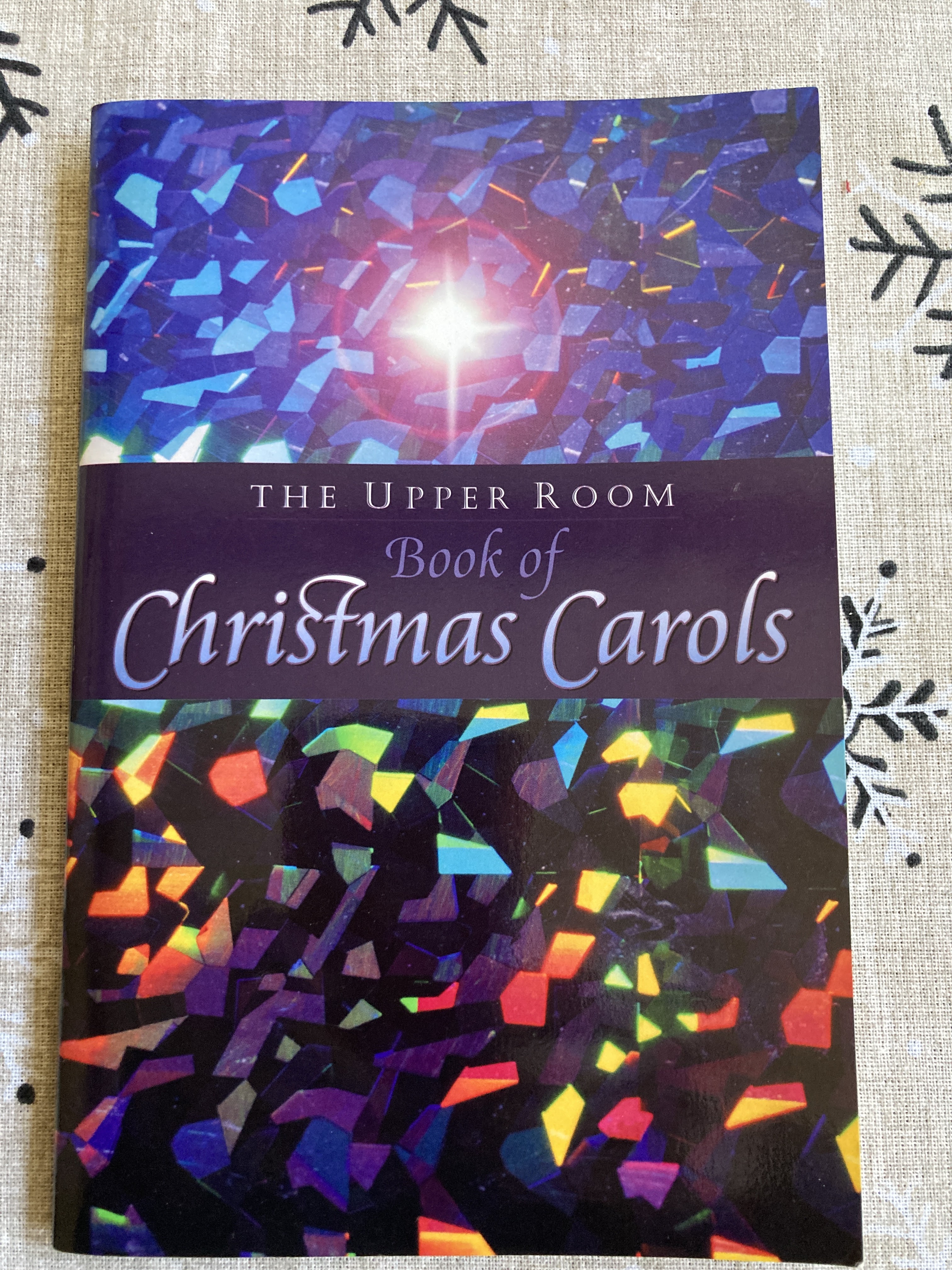
We purchased a dozen copies of this carol book ten year ago. You can still buy them online. There are other useful ones, but this is a nice size and contains 29 carols. Each song is scored like a traditional hymn but also includes guitar key notations. This carol book is versatile and sturdy enough to last for years.
Discover more from Journey North Character
Subscribe to get the latest posts sent to your email.

 Journey North Character
I love how you can give it so much insight into songs we take for granted and not really understand the meaning behind them. Thank you so much for sharing. Always inspiring!
Nicely done and very thought-provoking!
My Dear Friend, I enjoyed your writing about the Christmas Carol “I Heard the Bells on Christmas Day”. I always read one of my Christmas books during December as part of my devotions each day and this year I chose the book “Stories Behind The Best-Loved Songs Of Christmas” by Ace Collins. There are 31 Christmas carols in this book. The carol I read today was “I Heard the Bells on Christmas Day”. You had already shared some of the background story when we were visiting this weekend and now I was reading about the life of Longfellow and why this carol was written. Then, I came to the computer and read your Journey North. It was such a blessing since I already knew part of the story. I thought it was a “God Sighting”.
Shirley
Thank you, Shirley, for telling us about your “God Sighting”. Sweet.
Thank-you Karen!