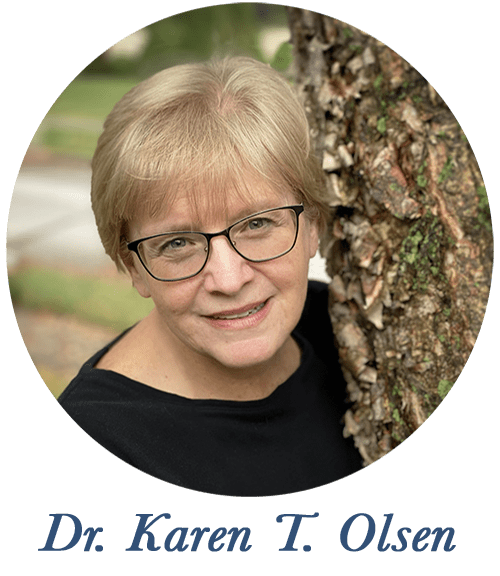
About Karen Thomas Olsen
Born and raised in Ohio, I attended college and graduate school in Indiana, moved to Scotts Valley, California south of San Jose to teach, back to Ohio for many years, to Arizona for 11 years with my husband, and finally to Ft. Wayne, Indiana to be near family. (Leaving Prescott Valley, Arizona in 2018 was very hard. Sigh. But for family? Worth it.)
I have taught in three Christian high schools and one community college. My first teaching position was in Scotts Valley, California. In the summer of 1980, a tall, dark, and handsome 26 year old California boy, who had recently completed his degree in Aeronautical Operations from San Jose State University, followed me to Columbus, Ohio where I had accepted a new teaching position at Worthington Christian High School.
There in Worthington we were married. Paul became an Air Traffic Controller, and we raised two beautiful girls in Piqua and Troy, Ohio. We now also have a son-in-law and two precious grandsons born in 2009 and 2012. In 2007, Lockheed Martin transferred my husband to Prescott Valley, Arizona, which was a great adventure for us. Arizona was a good place for my health and great for Paul, a California boy who loves the sunny southwest! However, being far from family is not easy. So, in July of 2018 we moved to Ft. Wayne, Indiana, where we are near relatives and just hours from each of our daughters, one near Chicago and one north of Cincinnati.
For years, I worked in Christian school curriculum design and development, which was challenging, exciting, and satisfying. After retiring in the summer of 2012, I focused on completing a doctorate, pursuing some writing projects, and being involved in Christian education at our church. Maintaining this blog continues to be important to me. With great gratitude to the Lord who carried me through the process, I graduated from Trinity Theological Seminary in August, 2016, earning a DRS (Doctor of Religious Studies) with an emphasis in theology. My dissertation is entitled "A Taxonomic Theology of Suffering and Joy Designed to Assist in Christian Growth."
Besides reading, learning, teaching, and writing, I love to swim, stroll around the neighborhood on my bike, take Water Aerobics classes, mingle with neighbors, and participate in our local church. As my health permits, I love to travel and see God’s amazing creation.
I’m wearing my eye glasses or “life lenses” which instruct me to “Look for the Lord in every page of Scripture, in every corner of nature, and in every chapter of my life." No matter the direction of my life, it's a journey north.
“So teach us to number our days that we may gain a heart of wisdom, ” prays Moses as recorded in Psalm 90:12. Numbers are teachers. ‘Tis the season of counting, so 2017 seems to be. (By the way, we are home now after a 10 1/2 week trip to the midwest. Note postscript below.)
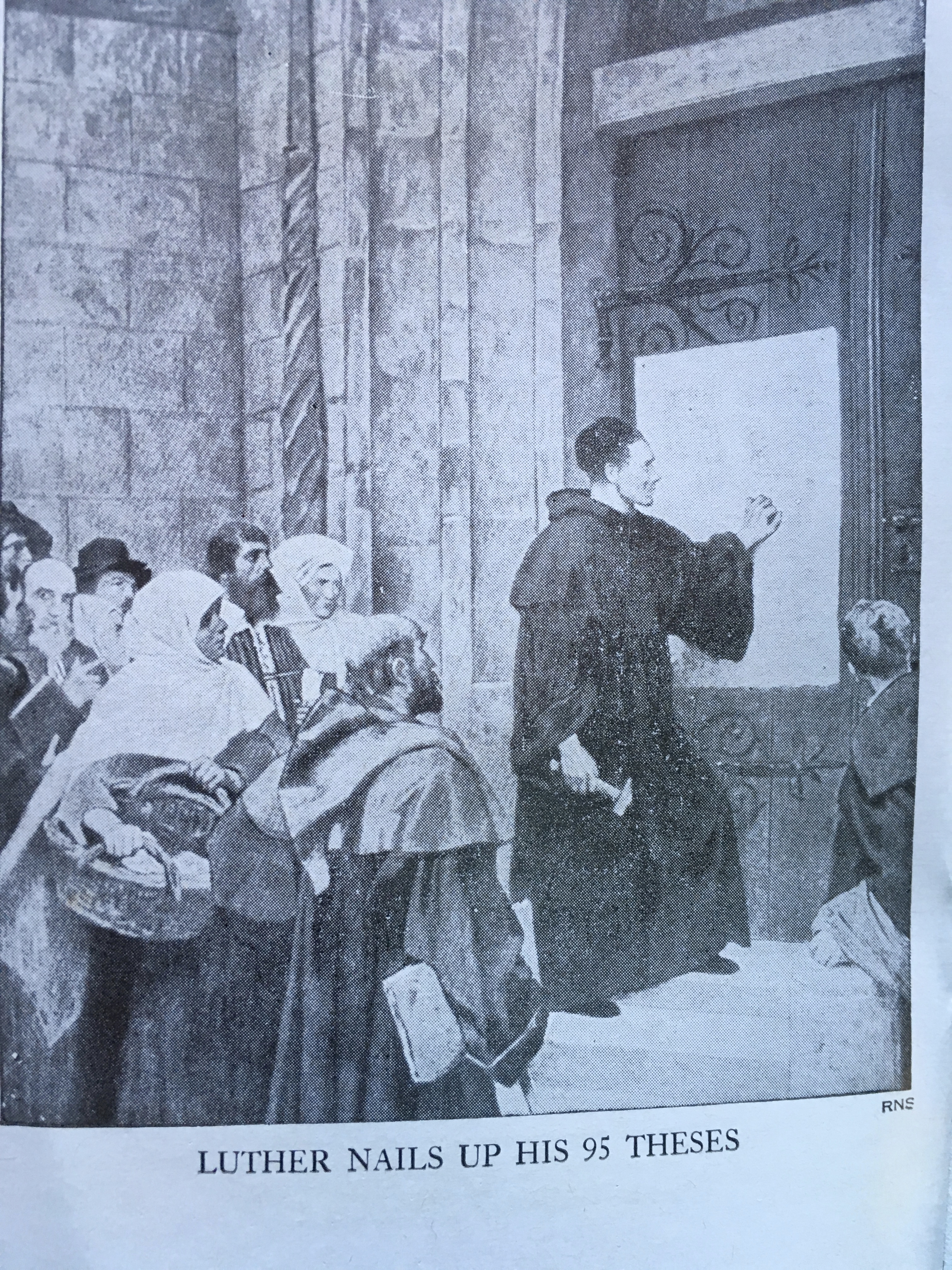
I’d like to consider the number one, after considering a few other numbers. Five hundred years have passed, as of this October 31, since Martin Luther (1483-1546) posted his 95 Theses (statements or declarations) on the door of the Castle Church in Wittenberg, Germany. This date is usually used as the historical marker for the beginning of the Protestant Reformation, although history reveals birth pangs centuries earlier. For instance, note Peter Waldo and the Waldensians (twelfth century), John Wycliffe called “the Morning Star of the Reformation” (1329-1384), and John Huss who was burned at the stake (1374-1415).
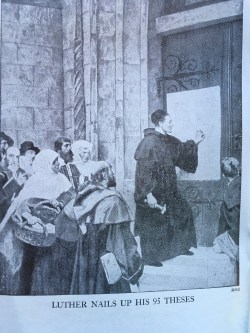
Via his 95 Theses, Luther intended to announce a public debate, hoping to clarify the University of Wittenberg’s position toward the sale of indulgences.
Have you read through the 95 Theses? Quite interesting. I have my father’s copy, and in this post you’ll find three photos I took of it. Ninety-five is an intimidating number. I’d prefer to examine the number one. You know, the number one can be overwhelming all by itself. One. Alone. Sola. Solo. Solus. Whole number. Not a fraction. Not plural. One. The integer.
What is an integer? You see, counting, numbers, and specifically, the number one have much to teach us. Continue reading →
My senses and heart have been overloaded these past two months during our Midwest travels and stays. We’ve made the Findlay Family Farm (on my mother’s side) the hub of our adventures. Whether at the farm, or my sister’s home in Indiana, or friends’ homes in Troy, Ohio, or Caesar’s Creek Campground south of Dayton, we find ourselves nestled in God’s diverse expressions of His glory through His creation and creatures.
Perspective is a view. A change of location changes one’s view, which should influence one’s perspective. For years I viewed the Midwest from an insider’s viewpoint. We’ve now lived in Arizona for ten years. From there I’ve acquired an outsider’s view of the Midwest.
Have you lived in various regions of the country or world? How does moving from one place to another impact your understandings of other places and people and even your understanding of yourself? Continue reading →
The summer is flying toward Autumn. Nearly a month has passed since I last posted and since Paul and I headed eastward in our F150 Lariat pulling our Coachmen Travel Trailer. Our Maiden DistanceVoyage.
The summer’s flying toward Autumn
Days dense with weight fly light as light.
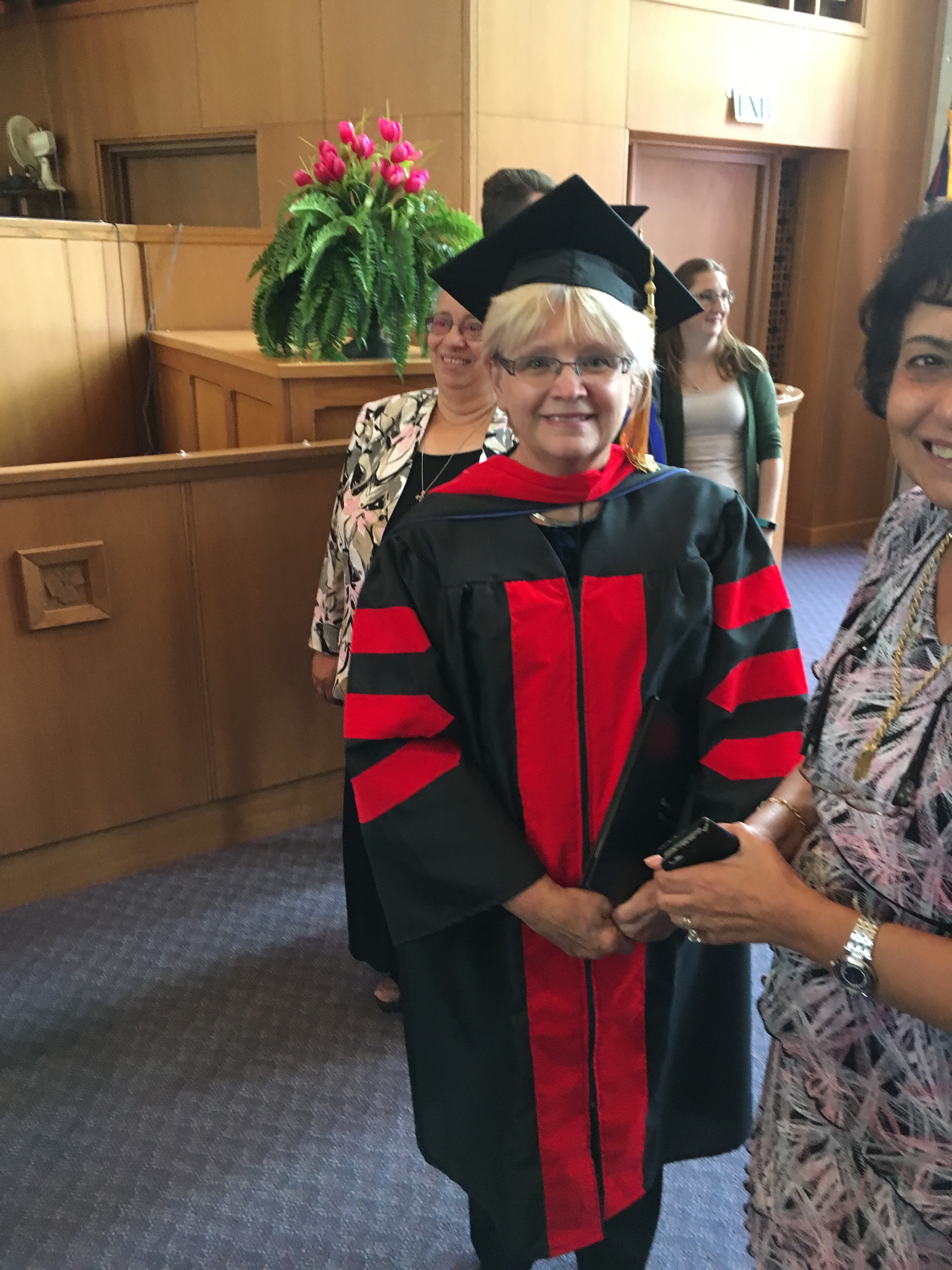
While the summer is flying, we’ve been driving. Driving across country from destination to destination. (Note previous post.) Not only are we now on the backside of my graduation*, we’ve also completed two weeks at “the farm”!

Commencement Ceremony on August 5, 2017
Trinity Theological Seminary
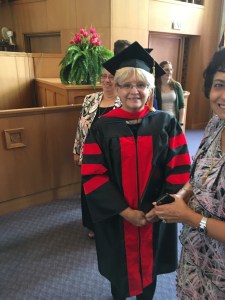
Dr. Karen Thomas Olsen
Continue reading →
Wow! You haven’t heard from me since June 19! What’s been up? I’ll let you know!
First, in my last post (a part of a series addressing my six sailing points on navigating our reading experiences), I addressed points three and four. I drafted a final post on points five and six over a month ago but did not publish it, wanting to revise it more. I think the series has gotten too dense, too heavy. Anyway. . .
Then summer turned into a river of raging rapids, rushing me miles down stream (some hyperbole). Pause, pace. More roaring rapids are about to carry me away again, but before they do. . .
I’m choosing to postpone the conclusion of my six point series (leaving very few of you in suspense), and I’m going to write about summer. Summer is a time for lightness, for adventure, a time to put aside didactic exposition, a time to storytell! (Lord willing, someday I’ll finish the six point series.)
The summer saga begins. And it begins with the giggles of a three year old fairy. Can you hear her? Flossy blond strands surround blue sky eyes. Sunshine twinkles from her delicate fingers and toes. For six days, she dances with us. Together we laugh. Continue reading →
Categories: Travels
| Tags: Robert Frost |
Recently, I re-read Patricia MacLachlan’s Sarah, Plain and Tall which won the 1986 Newbery Medal award. Yes, Newbery awards are for children’s literature. Good children’s books make good adult reading. I’m also reading Why Suffering by Ravi Zacharias and Vince Titale. What a contrast! The first is “an exquisite, sometimes painfully touching little tale” (according to The New York Times Book Review), a lovely narrative based upon a true story, while the latter is a theological exposition exploring theodicy and the meaning of suffering by two philosopher-theologians. Both are nutritious and yummy.
In some ways, I evaluate them differently, because of their differing purposes, audiences, and genres. I bring my background to my reading chair where I’m comfortably curled. “There is no frigate like a book,” Emily Dickinson exhorts us, so from my armchair, I sail, navigating by the six points of my Reader-Navigator’s Map.* Continue reading →
Are we there yet?
You mean, at the end of this series? No! It’s taking me a long time to get through it because I do not post every week. So, I’ll see if I can up the pace on this series about being a good reader and a self-discipler.
We’re on point two of six points on The Reader-Navigator’s Map.* Point 1 is Biblical Literacy (both the anchor and rudder) and point 2 is Genre Identity (the ship’s hull). As the ship’s hull, I see an understanding of a book’s (or a writing selection’s) genre as some ballast in my ship (my mind) giving me balance and perspective, essential to reasonable interpretation, analysis, and appreciation.
Don’t you love to learn and to read? I doubt you would read my blog otherwise. Since we must be rather brief (a book I am not writing here), I would like to offer a smattering of quotations from some expert readers along with some commentary to help us consider the impact of genre (categorization of literature) when reading.
I’m sure you view writing as a craft. Writers are sometimes called wordsmiths. Have you ever thought of reading as a craft? This is not my idea. A fascinating thought! Who said it? Continue reading →
My dear readers,
Today, I am supposed to address point two, Genre Identity, of our six points on The Reader-Navigator’s Map. Instead I’m going to ask for prayer. Yes, prayer is a genre, a category of communication both spoken and written. As a kind of literature, I can integrate it into our second point!
Prayer is a lifeline to the Lord. Like oxygen, we cannot live without it. Today, I want to ask you to pray for a 13 year old boy who is wasting away and will die without intervention — a miracle. This young man has dealt with neurological issues for years and has developed, probably from prescriptions, a disease called Akathisia, plus he has developed an eating disorder. Akathisia simply means” the inability to sit”; it is a movement disorder, an anxiety disorder. Combine this with an inability to eat or digest most foods, liquid or solid, and you can imagine the results. Continue reading →
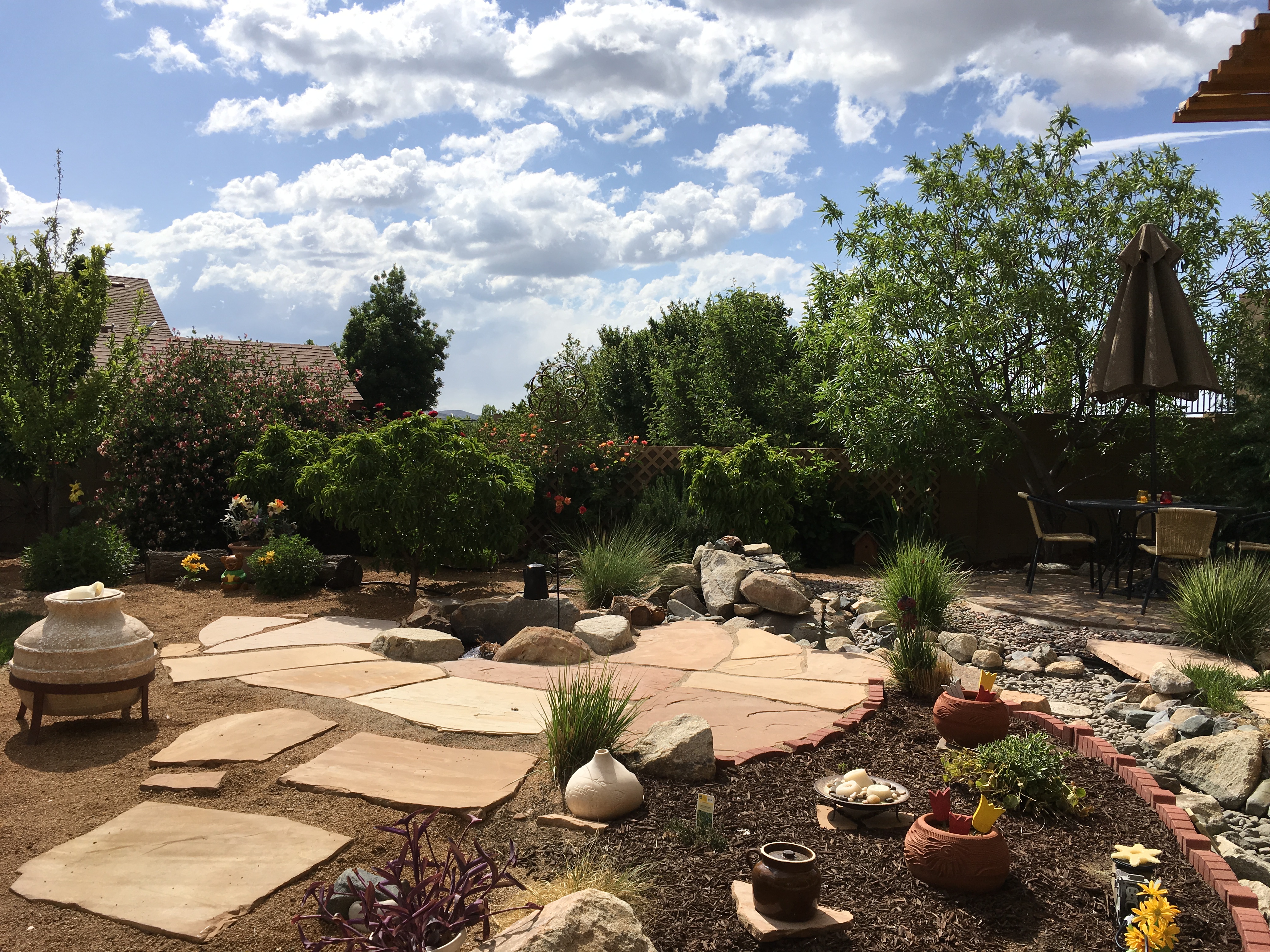
What a beautiful day today is! I’m sitting at my dining room table typing on my laptop while looking out over our side yard, viewing dwarf fruit trees in full foliage and tall rose bushes in prolific bloom — scarlet, yellow, and peach colored pedals. Billowy clouds herald God’s majesty.
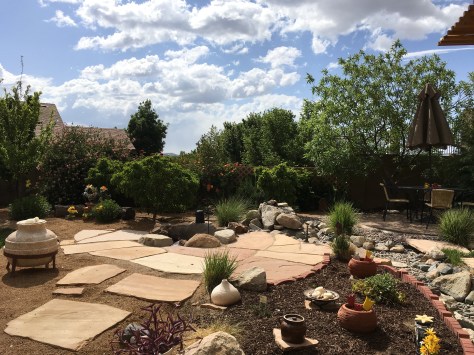
The heavens and our garden declare the glory of God.
Nature presents numberless volumes of divine literature: “The heavens are telling of the glory of God and the expanse is declaring the work of His hands. Day to day pours forth speech and night to night reveals knowledge “(Psalm 19:1-2 NASB). Telling, declaring, speaking, revealing. “God saw all that He had made, and behold, it was very good” (Genesis 1:31). From my window I’m reading a happy book. You have such books all around you in your nature’s libraries. Nature’s Divine Library.
In my previous post I presented suggestions for another library, your home library. I presented a dozen books as suggestions for your Biblical Literacy shelf, and then I described the first six. Today I’ll address the latter six books. Biblical Literacy (knowledge of Scripture’s narratives and declaratives; note post dated March 29, 2017) is the first of six points I’m offering as guidelines for navigating our reading experiences as Christ-followers — or pedestrian theologians — or salty, savory sailors on the Reading Sea. As Emily Dickinson declares, “There is no Frigate like a Book.”
Let’s look over the second six frigates, a small but powerful fleet. Ship Ahoy! (I hope you don’t mind my metaphors!) Continue reading →
I always encourage young people to start their own, personal libraries — to begin with just one shelf in their bedrooms to place books worth keeping for a long time, some for even a lifetime. Whatever our ages are, we can equip ourselves with excellent resources to help us disciple ourselves in Christ and to guide us in whatever we read.
In our last post, I presented six points (guideposts, navigator’s criteria) to guide the Christian reader. You may wonder why my first point would be Biblical Literacy. Employing our ship/ocean metaphor that I set up in the last post, I am identifying Biblical Literacy as the anchor to ground us, the ballast to stabilize us, and the rudder to guide our vessels — as Christ-followers, thinking and interacting with what we read, whatever we may be reading. Therefore, I’d like to offer you a concise bibliography of core books to build your biblical base. You may have a number of these or some similar to them. You may find some here that you may want to add to your wish list. A person growing in biblical literacy and alert thinking will want to use books such as these. Continue reading →