
Scattered. Unsettled. Where is the solid ground under my feet?
After four and a half months in Florida, I arrived home with my husband, Paul, from central Florida on May 16. Paul had flown home on March 24, and flew back south on May 7 to drive me home. I stayed longer because the Bible study I taught was scheduled for later in the spring. I had the wonderful opportunity to teach my Bible Study, A Traveler’s Guide through Suffering and Joy, to a group of ladies at our Florida church. The experience wrung me dry physically while delighting my heart.
What joy to spend six Monday mornings with twenty ladies who love the Lord and are hungry to study His Word! The intensity, wonder, and delight we experienced together was a true picture of Christian community: to commune together, sharing our common commitment to God, His Scriptures, and each other. Rich.
To share in common: this is a movement of community.
After just one week back home in Fort Wayne, we were bombarded with family members. To share in common: the crazy hubbub of family community.
Recently I read an article in The Washington Stand called “The Wilderness of Social Isolation and the Christian Call to Community,” by Hannah Tu. (1)
Isolation versus community. In recent years we’ve been hearing much about the isolation that modern technology has enabled as an unintended side effect of technological efficiency. Tech’s mixed blessing and bane.
What does community, isolation, and location (Florida and Indiana) have to do with my sense of being scattered and unsettled?
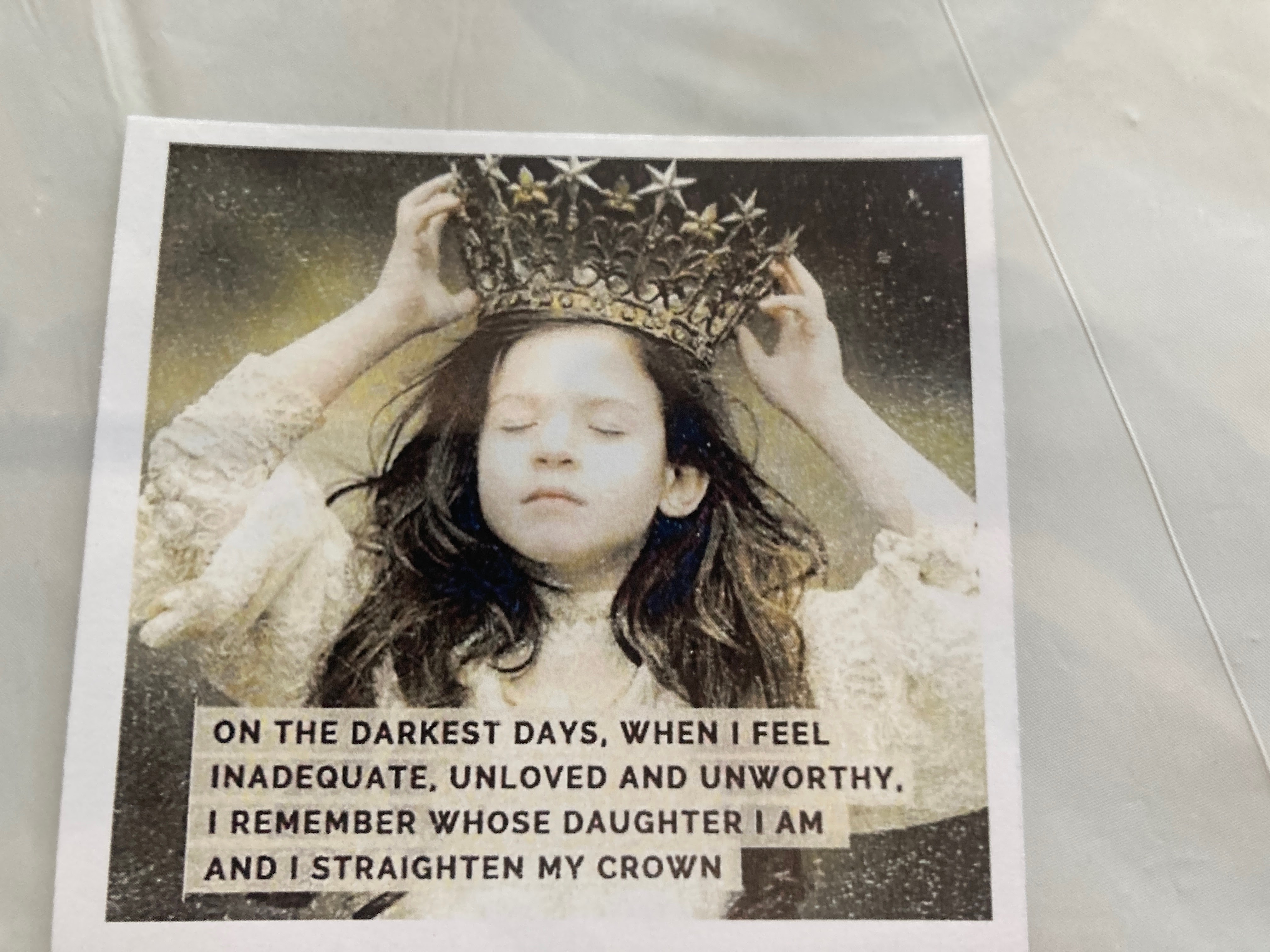
Paul and I have been evaluating our situation. Where do we belong? In our family? In the Body of Christ? In our neighborhood/community? How have we assimilated well or poorly? How is God using our current relationships and situations to direct our steps through our last chapters of earthly life?
Hannah Tu writes, “Humans are lonelier than ever before. Even before the pandemic, almost five out of 10 U.S. adults reported experiences of loneliness. For young adults aged 15-24, time spent in-person with friends has fallen almost 70% from 2003 to 2020, from about two and half hours down to 40 minutes per day. The lack of meaningful interaction comes with a cost. Research finds that a lack of social connections can be as dangerous to our health as smoking 15 cigarettes a day. Humans were designed for community, not for isolation. But the solution is always trickier than it first appears.”
Yes, it’s tricky. This is a serious problem for developing young people, one which may impact their entire lives. Loneliness, separation, and isolation have also presented well-known dilemmas for people in their retirement years.
Paul and I (retired) moved to Fort Wayne, Indiana eight years ago from Prescott Valley, Arizona, where we lived for eleven years. We now live three to four hours from each daughter (one daughter lives near Chicago and the other near Cincinnati). While we live closer and see them more often, we still see them only a few or a handful of times a year. Good and growing relationships require intentional investment, what I call cultivation. Prayerful cultivation. Well, it appears that all of us have been praying and to various degrees investing. It is slowly paying off. Relationships that were poor are better. Relationships that were good and then poor required more attention. We’re experiencing some pleasant fruit from attentive labor mutually given.
While in Florida, I completed a 16 session, online counseling series with my Chicago daughter. She asked me to be in counseling with her, and we did this together. It was beneficial yet draining. She’s thanked me for engaging with her in order to advance our relationship. For all of her adult life she has invested in her relationships with her parents, giving us honor and attention even though we’ve lived far from each other for many years.
Our other daughter, who is married with four children and has a serious career as a bank manager, is swamped with responsibilities. We have not lived close to them for their entire marriage (19 years) and also have not been relationally close, but things are changing. When we see them, the encounters are mainly positive and the children (ages 17,14, 4, and 2) feel loved by us. Paul can still keep up with the big boys (ages 17 and 14), and they love their Papa O. As the parents grow in Christ, we’ve seen them grow more comfortable with us and more open to us. As we’ve grown in Christ and have gotten older, we’ve changed too. I think everyone in our family is encouraged.
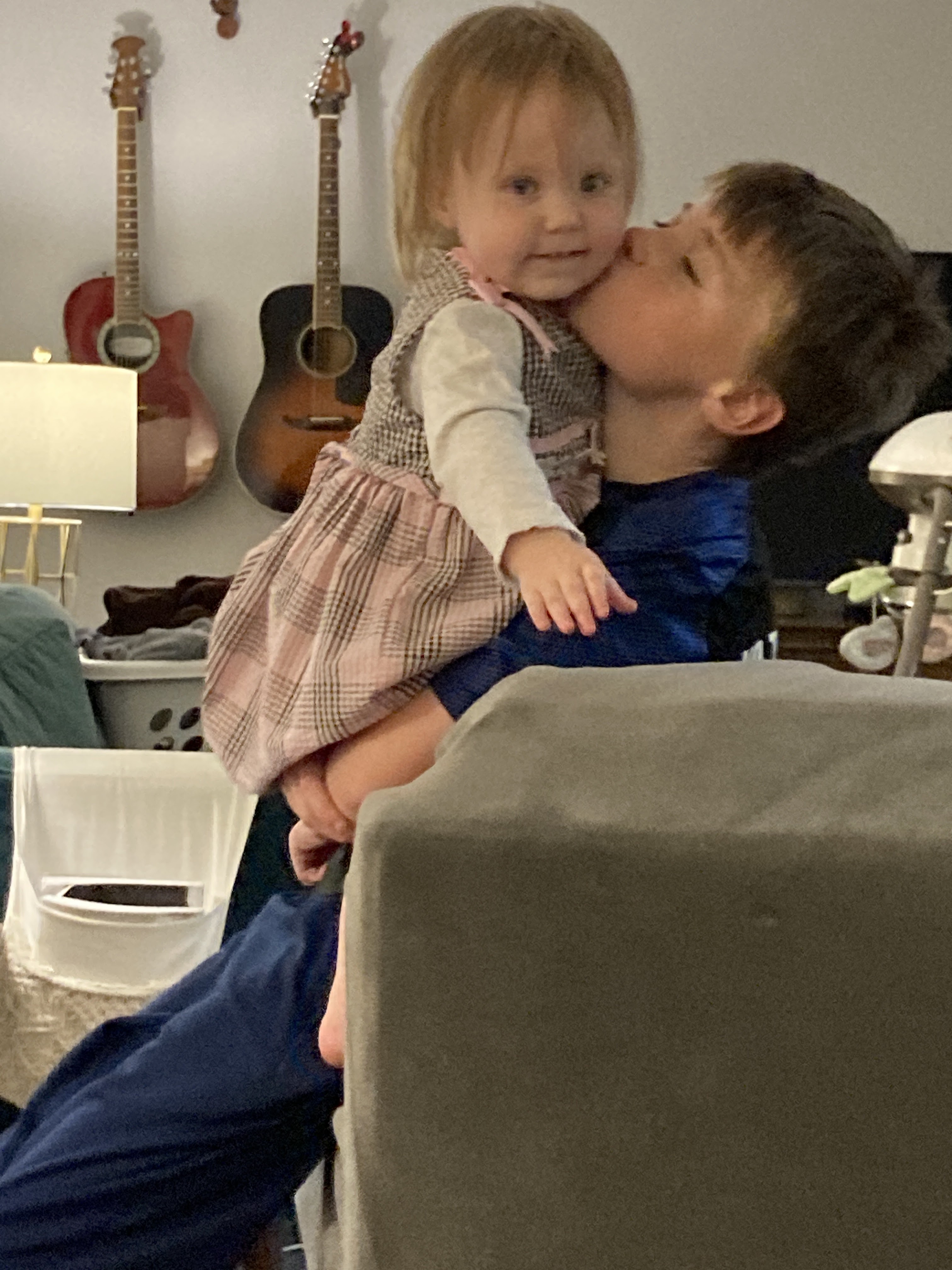
Strengthened family community gives us reason to stay in the Midwest, but it does not change the reality that we see each other physically just a handful of times a year. Daily life for us at this season of life does not center around family members. For some people, such as my sister, this is not true. She and her husband are deeply involved with their adult children and grandchildren on a weekly basis. Their God-given communal call differs from ours.
The next level of community after family is the Body of Christ, beginning with local church belonging. In our eight years in Fort Wayne, we have not been able to assimilate well into one local body, but we do have dear Christian friends here. We’ve been part of a small home Bible study for six years that is not connected to a particular church. The leaders of this group moved to Alabama recently, which I thought would end the group, but they still meet some, at least for now. We don’t feel the pull of a local church or fellowship group to keep us here.
The next level of community is one’s local neighborhood and town/city. We live in a beautiful house in a beautiful wooded neighborhood, partially hilly, set near a river with a creek running through it. Scattered through the winding streets are three or four big ponds, and we have a club house, two pools, and tennis courts. We’ve met many nice people here and have made some friends. For a few years, I was involved in a local, political network. This was very interesting. For four years, Paul had a part-time job at a car center, where he spent time with guys and cars. Great fun and ministry for him. The business was sold last year, ending that community connection.
As I review what I’ve written about circles of community (family, Body of Christ, and neighborhood/town), I see how kind God has been to us. We have so much for which to be grateful. Thank You, Lord! Paul and I also observe that our connections here are not firmly rooting us here.
Another part of the story is my health, which is a daily and nightly tedious irritation. My body is always angry. Headaches do not end but simply surge in and out like irregular waves of the tide, less noisy to more noisy. From head to toe, I live with constant neurological pain, muscular contraction, and so on. You don’t want to hear. I don’t want to live it. This has been my life for 40 years and more. I try to act normal as much as possible. Living in the Midwest does not help. Paul (who grew up in northern California) did not want to return to the Midwest and agreed to it for the sake of family relations, only if we would spend our winters in the south, which we have done.
Now, we are looking at moving to Florida permanently, not just for the winters. Our winter roots which have developed these past seven winters pave a smoother transitional path. The hard part is the sale of one home, purchase of another, and the actual move. What is making it emotionally harder is the improvement in family relations. But they can visit us in Florida and Paul thinks that we can spend a month or so each summer in the Midwest to have real presence with family and friends. Technology, which can promote isolation can also be a tool of connection. This is particularly true when relationships are good and human contact does occur at regular (though less than ideal) times.
Each of us walks through chapters and seasons of our lives. Can we accept transitioning into new chapters? Can we cultivate community (family, church, and neighborhood) in different ways in each stage of life? Can we find some continuity while embracing change?
I’m working on this. I’m counseling myself to embrace a settledness in the context of confusion and uncertainty. When I read Psalm 46, I see a crazy, dramatic, dangerous context. ” God is our refuge and strength, a very present help in trouble,” the psalm begins. So what’s the “therefore”? “Therefore we will not fear though the earth should change, and though the mountains slip into the heart of the sea…” (verse 2).
Well, that’s crazier and more dangerous than my situation. Yet, the psalmist concludes with an imperative in verse 10: “Be still and know that I am God…” (KJV), or as the NASB translates, “Cease striving and know that I am God.” Can I stop my heart from fussing? Apparently, I have that agency, and with the strength of the Holy Spirit, I have the power to follow through, no matter how repeatedly I have to counsel myself to be still, to stop fixating on the situation, timing, and on decision-making before decisions can be made. This is possible when I know that God is God (and I have no divine powers or wisdom).
I remember that just a few psalms earlier in Psalm 42 and 43 (which probably once were all one psalm), the psalmists (the sons of Korah) encourage self-counsel based upon biblical knowledge. “Why are you in despair, O my soul? And why have you become disturbed within me? Hope in God for I shall again praise Him for the help of His presence” (or “…praise Him who is the help of my countenance and my God”). Note that this is stated and then repeated (42: 5, 11, and 43: 5). Clearly, we are to talk to ourselves while we are praying to God and while we are reading the Scriptures. Our knowledge of God opens us to gain self-knowledge and wisdom. This wisdom combined with an awareness of His loving presence will calm us, still us, and grow us up in Christ.
This article is not ending where I thought it would. Actually, I wasn’t sure where it would land. I’m happy to have it land in the lap of our Lord, which reminds me of Psalm 131:2 which declares, “Surely I have composed and quieted my soul; like a weaned child who rests against his mother, my soul is like a weaned child within me.” (Read this three verse psalm and claim it as your own guide.) When we cluster together Psalms 42, 43, 46, and 131, we have quite a nourishing meal that strengthens us, reorienting our hearts and lives.
“Scattered. Unsettled. Where is the solid ground under my feet?” This is how I started this post.
Now, I end in the most solid place — the Rock of my soul — in the lap of my Good Shepherd-LORD, where I best commune.
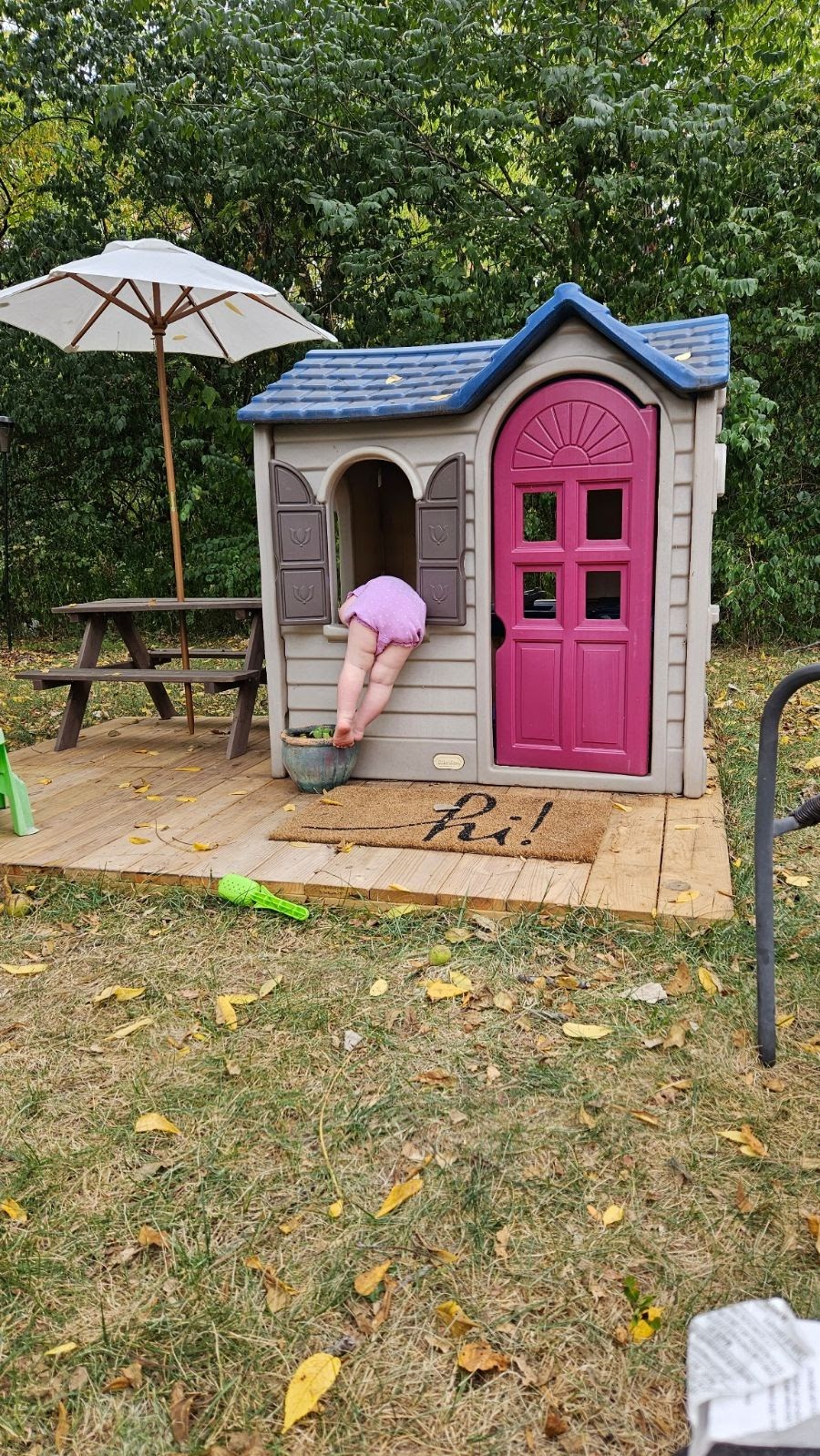
Grandchildren equal laughter.
Discover more from Journey North Character
Subscribe to get the latest posts sent to your email.

 Journey North Character
This is what counts, “Now, I end in the most solid place — the Rock of my soul — in the lap of my Good Shepherd-LORD, where I best commune.” And yes, to grandchildren equaling laughter!
Thank you. Yes. This is what counts.
I loved the pictures of your little girl! See you soon!